
The irrelevant ‘relevance’ of the Church of England
- Mar 25
- 3 min read
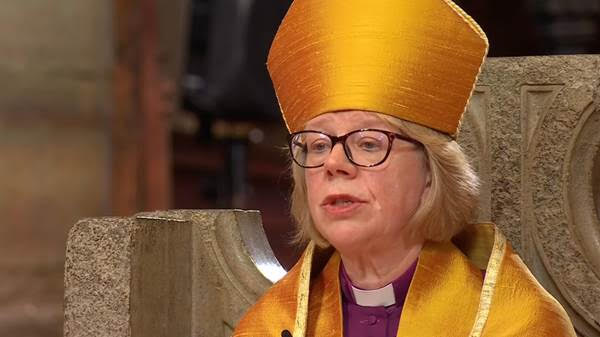
Dame Sarah Mullally | Church of England YouTube
By Mike Judge
EVANGELICAL TIMES
25 Mar 2026
Earlier today, Sarah Mullally was officially installed as the first-ever female Archbishop of Canterbury. As a non-Anglican Christian, I always find the ceremonies and rituals of the Church of England strange and alien — all those flowing robes and pointy hats. But this ceremony, in particular, had yet more to make me roll my eyes and shake my head.
Dame Mullally’s installation as Archbishop of Canterbury will no doubt be hailed in many quarters as a historic triumph — a long-awaited step in a more “inclusive” and “relevant” direction. Yet for those who take Scripture seriously, it marks not a milestone of faithfulness, but another sobering chapter in the Church of England’s steady drift from biblical authority.
We are told this moment should be celebrated because it is unprecedented. That much is true. But novelty has never been a biblical qualification for leadership. The true church of Christ does not belong to the age, nor is it tasked with keeping pace with cultural trends. It belongs to the one who died for its sake. And its ordering is given in His Word — not negotiated in response to social pressure.
In a desperate bid to appear “relevant,” the installation ceremony itself became a display of carefully curated inclusivity. There were prayers in Urdu, a hymn in the South African language of Xhosa, and even a Bible reading delivered by the Roman Catholic Archbishop of Westminster.
As if to underscore this ecumenical trajectory, the new Archbishop wore the pastoral ring presented to Michael Ramsey by Pope Paul VI in 1966 — a symbolic gesture that speaks volumes about the direction of travel. One is left to ask: at what point does the pursuit of visible unity come at the cost of doctrinal clarity?
This blending of traditions and signals of rapprochement with Rome may be applauded in some circles, but it raises serious concerns for those who hold to the hard-won truths of the Reformation. Unity, in Scripture, is grounded in truth — not in shared ceremonies or symbolic gestures that obscure enduring theological differences.
Equally troubling were Dame Sarah’s remarks ahead of the service. Encouraging women to “follow your dreams,” she emphasised the importance of representation and personal aspiration. “It’s entirely possible for you to follow your dreams and what you want to do,” she said.
Yet such language sits uneasily with the heart of the Christian message. The call of Christ is not to self-fulfilment, but to self-denial. The question is not whether we can achieve our ambitions, but whether we are willing to submit to His will. Discipleship is not about realising our dreams, but about obedience — even when it runs counter to them.
In her inaugural sermon, the new Archbishop addressed the deeply serious issue of abuse within the Church of England, acknowledging past failures and calling for greater care for victims. These are necessary words, and no faithful Christian would dispute the importance of justice, repentance, and protection for the vulnerable.
Yet the moment was overshadowed by the reality that concerns about safeguarding within the Church of England remain unresolved. The interruption of the service by a heckler — however unwelcome that maybe — served as a stark reminder that institutional statements alone cannot restore trust.
The resignation of her predecessor, Justin Welby, over his handling of abuse allegations cast a long shadow over this transition. That shadow has not been dispelled by rhetoric alone. The Church of England must demonstrate, not merely declare, its commitment to truth and accountability.
Taken together, these elements paint a picture that is difficult to ignore. A ceremony shaped by cultural inclusivity, an embrace of ecumenical symbolism, a message centred on personal aspiration, and ongoing questions about integrity — all point to a Church increasingly shaped by the spirit of the age rather than the authority of Scripture.
Our world desperately needs to hear the never-chasing truths of the gospel which are relevant to people's deepest needs. A generation of young people are asking deep existential questions: Why do I exist? What's the meaning of my life? Is there any truth out there? Is there a great plan for humanity? Where is history itself heading?
Yet rather than addressing those questions, the Church of England hierarchy is chasing a woke form of 'relevance'. And in doing so, the Church of England has become totally irrelevant to those who are seeking the truth.
END


mình có lần lướt đọc mấy trao đổi trên mạng شيخ روحاني thì thấy nhắc nên cũng tò mò mở ra xem thử cho biết. mình không tìm hiểu sâu chỉ xem qua trong thời gian ngắn để quan sát bố cục cách sắp xếp جلب الحبيب các mục và trình bày nội جلب الحبيب dung tổng thể. cảm giác là các phần được trình bày khá gọn, các hurentest berlin mục rõ ràng nên đọc lướt cũng không bị rối với mình như berlinintim vậy là đủ để nắm tin cơ bản rồi. جلب الحبيب
thank u, i like play run 3