
Transubstantiation is a violation of the central biblical doctrine of "justification by faith.” - Collins
By Chuck Collins
February 7, 2026
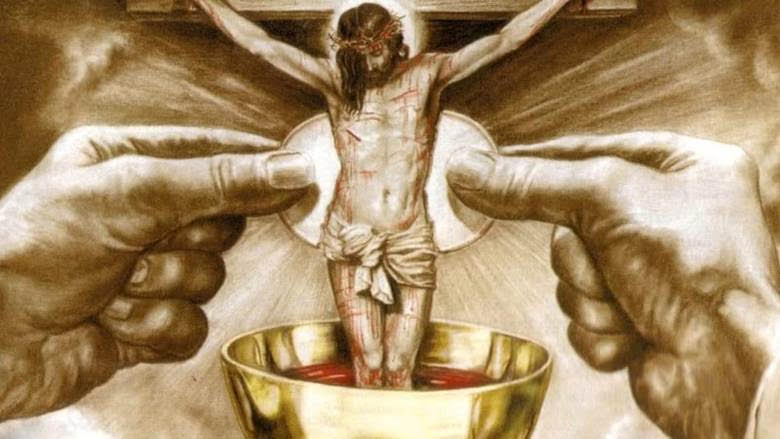
Why are there so many different churches? Mostly because there are so many different views of the Lord's Supper. The unwillingness of the Medieval Catholic Church to budge even an inch to the Protestants, and the unwillingness of the 16th century reformers to yield to one another, explains the important denominational differences. Are the elements of bread and wine automatically changed into the physical body and blood of Christ by a sacrificing priest on a sacrificial altar? Or, does the sacrament of Holy Communion mean something even more miraculous and fantastic? All the reformers agreed that transubstantiation was a violation of the central biblical doctrine of "justification by faith.” But they differed in their understandings of “real presence” in the eucharist.
Philip Hesse, one of Germany's leaders, called together the first generation principals of the Protestant Reformation with the hope that there could be Christian unity. Philip’s nickname was “the magnanimous.” The Marburg Colloquy (October 1-4, 1529) brought together the reformers who easily agreed on all matters of doctrine, 14-Articles, except for the last Article on the meaning of Holy Communion. The Colloquy is remembered for what it did not accomplish: "We have not been able to agree at this time whether the true body and blood of Christ are corporeally present in the bread and wine." All Protestants disavowed the Medieval teaching of transubstantiation: the belief that the substance of the elements change entirely into the body/blood of Christ, while the appearance and taste (the accidents) remain the same. The miracle for Roman Catholics is that bread and wine become the actual body and blood of our Lord to be lifted up and carried around for all to gaze upon and worship. Protestants, on the other hand, generally view real presence as Christ’s spiritual presence, as Christians faithfully receive the grace of the sacrament by faith with thanksgiving.
The standoff between Martin Luther and Ulrich Zwingli at Marburg is infamous. Luther taught that the blessed bread and wine of Communion is Christ’s corporeal body and blood, but, unlike transubstantiation, the breadness and wineness continue to exist united with the divine substance. Later this was called consubstantiation. Consubstantiation was Edward Pusey’s controversial position. Pusey was Anglican and a well known 1830’s Tractarian leader who viewed Christ’s body and blood “in, with, and under” the bread and wine. This was the adopted explanation of many high church Anglicans, even though it contradicts the clear teaching of the historic Anglican formularies. Zwingli was happily settled on the idea that the Lord's Supper is a memorial commemoration, symbolic of Jesus' death on the cross. Luther would not leave "This is my body" and Zwingli was stuck on "Do this in remembrance of me.”
The winner of the Marburg Colloquy, as far as Anglicans are concerned, was John Calvin who was not even present! Calvin and Archbishop Thomas Cranmer were essentially second-generation reformers riding on coattails, and clarifying those matters that were unclear at the beginning of the Reformation. It was Calvin and his followers who most influenced the Church of England’s reformed sacramental theology in the Book of Common Prayer and the Articles of Religion. Cranmer, the chief architect of the Prayer Book and Anglican’s confessional statement, believed that Christ is present “after an heavenly and spiritual manner” in the bread and wine of Communion, because his body is in heaven at the right hand of the Father. The greater miracle of Holy Communion is not the transformation of bread and wine, but the transformation in the hearts and wills of those who receive the grace of the sacrament by faith with thanksgiving (who receive “rightly, worthily, and with faith,” Article 28).
Borrowing ideas from the church fathers, especially Cyril of Alexandria, Cranmer spoke of communion as reunion (commingling) with Christ - the way wax melts and fuses together with other wax. And since Christ cannot be divided, human and divine (the Nestorian heresy), the happy reunion of Communion is with the whole Christ in heaven and on earth. Jesus reunions with his people, both spiritually in our hearts while raising us to be with him again in the “heavenly places,” that he may dwell in us and we in him. These are Cranmer's words of institution: "The Body of our Lord Jesus Christ which was given for thee, preserve thy body and soul unto everlasting life; take and eat them in remembrance that Christ died for thee, and feed on him in thy heart by faith with thanksgiving.”
When Jesus speaks of eating his flesh and drinking his blood in John chapter 6, he is not speaking specifically about the sacrament, but of the union Christians have when they become Christian and the reunion they enjoy in the sacrament: we are baptized with Christ in death and raised with him in resurrection (Romans 6). St. Paul puts it this way: “You were have died, and your life is hidden with Christ in God” (Colossians 3:3).
On February 6, 1564, John Calvin preached his last sermon, ending a golden era and his twenty-three years ministry in Geneva. His mouth reportedly was filled with blood as he was carried away in a chair. Three months later he died.
(Recommended: "Thomas Cranmer Reputation Reconsidered," Ashley Null, Reformation Reputations: The Power of the Individual in English Reformation History, 2021, Ed. Crankshaw and Gross)


If the consecrated elements in their inner essence are Christ, they deserve the respect that He Himself deserves, and all those passages from the New Testament apply: "The Son of Man must be lifted up."
"Behold the Lamb of God! Behold Him that taketh away the sins of the World!"
And so on. The whole Receptionism line doesn't really follow what the Gospels say. "Take, eat. THIS is my Body." The antecedent for "this" is the bread. It is His Body independent of whatever is done to it and before the disciples eat it. Likewise for the wine. It is His Blood, shed for thee, independent of whether it is consumed.
Thus why Luther refused to bend on this point.
Catholic here 😊....just some thoughts...I'm never sure why it apparently took Our Lord 1500 years to correct His church if it were wrong? The Eucharist presupposes faith.
St Paul said (1Cor 11) 'And so anyone who eats the bread or drinks the cup of the Lord unworthily will be behaving unworthily toward the body and blood of the Lord. Everyone is to recollect himself before eating this bread and drinking this cup, because a person who eats and drinks without recognizing the body is eating and drinking his own condemnation.'
John Chrysostom is known as “the Doctor of the Eucharist.” In 398 he became Patriarch of Constantinople. He wrote (61st homily i think) 'We must reverence God everywhere. We must…