
Confessional or Conciliar? The Battle for ACNA's Soul
- May 12
- 8 min read
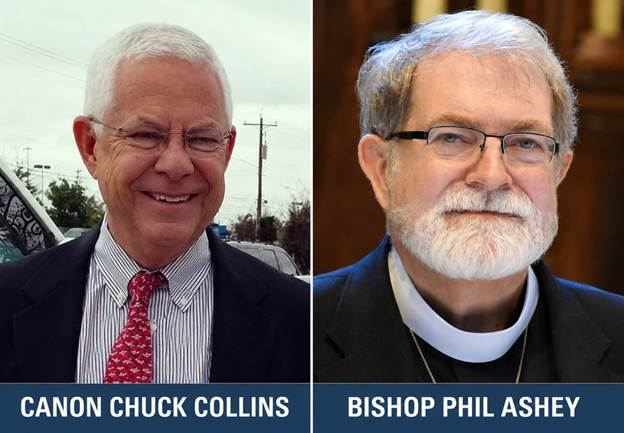
Two voices, two visions vie for the Anglican Church in North America: Will it be Bishop Phil Ashey's Conciliarism or Canon Chuck Collins' Reformation Anglicanism?
COMMENTARY
By David W. Virtue I www.virtueonline.org I May 12, 2026
The Anglican Church in North America (ACNA) is a province under deepening pressure. Archbishop Steve Wood, elected in June 2024, became the first archbishop in the denomination's history to face an ecclesiastical presentment, in October 2025, over allegations of sexual harassment, bullying of church staff, and plagiarism. He was inhibited on November 16, 2025 by Julian Dobbs, the newly appointed dean and acting archbishop — who subsequently himself faced allegations of financial misconduct connected to a UK-based charity under active police investigation.
The province that was formed to be a refuge from the Episcopal Church's institutional dysfunction is now generating its own institutional crises at the highest levels of leadership. It is against this deeply troubled backdrop that the competing visions of Bishop Ashey and CanonCollins must be understood.
Bishop Phil Ashey and the Conciliar Vision
Bishop Ashey is a canon lawyer and former head of the American Anglican Council He was involved in the founding of the ACNA and the development of GAFCON and the Global South Fellowship of Anglican Churches as counterweights to the Anglican Communion structures. In January 2025 he was consecrated as Bishop of the Diocese of Western Anglicans.
His governing theological and ecclesiological framework is what he calls Anglican conciliarism — a vision he has developed over many years and set out systematically in his 2017 book Anglican Conciliarism: The Church Meeting to Decide Together. In it, Ashey argues that Anglicanism has always been shaped by a distinctive conciliar approach — episcopally led, synodically governed, and accountable to the authority of Scripture — and that the deficit of authority behind today's doctrinal conflicts and fractured unity stems from the failure to practice genuine conciliarism at the global level of the Communion.
The roots of the conciliar model, as Ashey traces it, go back to the early church. Starting with the Jerusalem Council in Acts 15, the church gathered leaders from its biggest regions and made rulings that were binding on all local churches, following a pattern of episcopal leadership and synodical government. Ashey argues that Anglicans have a distinctive conciliar way of governing, first used in the early 7th century in the Provinces of Canterbury and York, which holds synods at every level of the church in order to gain the mind of the whole church, insists on regular and ongoing councils to ensure ongoing reformation, but also recognizes that councils can and do err, as Article XXI of the Thirty-Nine Articles states. It continually looks to Scripture for the church's final authority.
Crucially, Ashey applies this conciliar framework directly to the ACNA's most pressing internal crisis — women's ordination. He argues that there is nothing preventing the archbishop and ACNA College of Bishops from following an Anglican conciliar process in addressing women's ordination. It would require the College to restructure the way it does its business so that there can be a conclave-like gathering at least once a year to address such difficult and controversial issues, involving gifted and qualified lay and clergy theologians and specialists as non-voting but fully contributing members, and requiring the preparation of teaching and catechetical materials for the whole church to receive the decision of the bishops.
For Ashey, this is not a procedural nicety but a theological imperative. The authority of the bishops to guard the faith and order of the church is precisely the authority that cannot be delegated away — not to a constitution, not to a canon lawyer, and not to the path of least institutional resistance. The conciliar process is the mechanism by which the whole church, properly ordered, hears from God and acts accordingly.
The strength of Ashey's position is its institutional seriousness and its Anglican rootedness. He is not calling for an evangelical free-for-all or an Anglo-Catholic veto — he is calling for the ACNA to be what its own founding documents claim it already is. He sees hope in the ACNA, where conciliarism is practiced at all levels of the church, which declares forthrightly that Scripture is its rule and ultimate standard, and tasks its bishops with protecting faith and doctrine.
The weakness — and critics have identified it — is that conciliarism as a process is only as good as the theological convictions of those who operate it. A conciliar process conducted by bishops who are institutionally committed to maintaining the status quo on women's ordination will produce a conciliar ratification of the status quo. Process without conviction is machinery without fuel. The question is whether the conciliar process will be the vehicle for genuine resolution or merely the mechanism for a more dignified deferral.
Canon Chuck Collins and the Reformation Anglican Vision
Whereas Ashey's framework is institutional and procedural, Chuck Collins says that such things as councils and synods follow theology, and he sees that the ACNA has not done the harder work of theological reflection in its rush to plant 1000 churches. He is convinced that this early stage of Anglicanism in America is missing an opportunity when it leads with a conciliar vision, like the “Instruments of Unity” failed to do. Instead, he suggests that this time of confusion and turmoil requires a theological renaissance and recovery of what Anglicans have historically believed. Collins, formerly Canon Theologian under Bishop Terry Kelshaw, rector of Christ Church San Antonio, the founding Director for the Center for Reformation Anglicanism, and the author of Cranmer’s Church: Then and Today, represents a stream of ACNA that is begging the church to consider its unique offering to the universal church so that we do not miss this opportunity for theological renaissance and a return to what Anglicans have historically believed and taught.
Collins' starting point is unambiguous. He states that Anglicans don’t vote on truth, we submit to it — the truth of God’s Word written as this is upheld and explained in the traditional Anglican “formularies” (Thirty-nine Articles, 1662 Book of Common Prayer, and the two books of Homilies). He argues that the ACNA is asking and answering the wrong question when it begins by talking about a conciliar vision. What is expressed in the Jerusalem Declaration, he says, is “confessional,” and this precedes any constructive discussion about organization. The Articles of Religion, for example, were written at the same time and with the same purpose as the other great Protestant confessions, they have been subscribed to throughout our history, and they state the essentials of Anglican faith.
Collins states that The Articles and the Prayer Book are clear about Anglican essentials and “generous” in matters that are not addressed and considered adiaphora - as Anglicans should be today. He reminds us that this is what Oliver O’Donovan calls Anglican’s via media. The English reformers sought to be completely faithful to the catholic and apostolic faith, the interpretation of the Bible over time, but they uniformly agreed about the primacy and perspicuity of Holy Scripture.
His critique of the ACNA's founding generation is pointed and important. He notes that Archbishop Bob Duncan's 2006 address at Nashotah House, entitled "The Future of Anglicanism," rightly called the church to reinvest in the authority of Holy Scripture, but unfortunately, he failed to connect this to anything in Anglican history — to the passion of the English reformers, the Elizabethan Settlement, or the Anglican formularies. Such a well-meaning call, Collins argues, could have been delivered by an orthodox Methodist bishop or a Presbyterian superintendent. In other words, the ACNA was formed with a broadly evangelical orthodoxy that lacked specificity about what Anglicans believe — and that gap has never been adequately filled. The call to get as many as possible in this Anglican boat to prove our solvency and viability is putting the cart before the horse. Collins suggests this is a missed opportunity to recover our confessional nature that was completely abandoned by the church that we left. He says that the end result is that neighboring ACNA churches around the country can be teaching distinctly different ideas and even different theologies, and that this will eventually lead to the same path that the Episcopal Church took.
For Collins, the solution is Reformation Anglicanism — a deliberate, historically rooted recovery of the theological identity that the English Reformers constructed and defended in our formularies. Reformation Anglicanism is the Protestant tradition of 16th century England that honors the creeds and the church fathers, but distinctly sees Holy Scripture as primary and the norming norm for liturgical reform.
On the question of Canterbury, Collins is equally direct. He argues that Anglicans believe that Canterbury's word is only as good as he upholds God's Word, and his authority only as strong as he upholds the Anglican heritage. When Canterbury breaks with the doctrines and practices of the received faith, the Reformers themselves — Cranmer, Jewel, Hooker, Perkins — would have had no hesitation to break with Canterbury, because the identity of Anglicanism does not lie in communion with an historic see, but in the doctrines and practices that adhere to the gospel. This is a direct rebuttal of the institutionalist argument that communion with Canterbury defines Anglican identity — and it places Collins firmly in the GAFCON trajectory.
For Canon Collins the important question for the ACNA is clear: even though the history of the Church of England, the ACNA Constitution and Canons, and the Jerusalem Declaration, all state that this church is confessional, why is the heart cry of many of its leaders “conciliar” — “let’s devise more instruments of unity that essentially vote on truth rather than submit to the essentials as we have received them.” Confessional Anglicanism means that theological content determines institutional boundaries. Conciliar identity means the institutional process determines the theological conclusions. These are not merely different emphases — they are different understandings of what a church believes and what this church offers the unbelieving world that is dying to know Jesus Christ.
The Crisis Now: Wood, Dobbs, and Institutional Credibility
The leadership crisis of 2025 has given both Ashey's and Collins' visions an acute urgency. The province’s credibility is being shaken to the core at precisely the moment when it needs stable and authoritative leadership to navigate the women's ordination question.
For Collins, the leadership crisis is inseparable from the theological crisis. A province that has not settled what it believes about Scripture's authority, holy orders, and Anglican identity will inevitably struggle to form and sustain the kind of leadership character that orthodox Anglican ministry requires. The institutional is downstream of the theological.
For Ashey, the leadership crisis makes the conciliar solution more urgent, not less. The College of Bishops, properly convened and properly accountable, is precisely the mechanism by which a province weathers leadership failures at the primatial level. Conciliarism is not dependent on the virtue of any single archbishop — it distributes authority in a way that makes the institution more resilient to individual failure.
So, we have two visions of one province. Both are committed to scriptural authority. Both are committed to orthodox Anglican identity. Both understand that the ACNA's founding compromise on women's ordination cannot be indefinitely sustained. Both write and speak with the seriousness of men who understand what is at stake. The future of the ACNA, if it has one, must shortly be decided or its priests and parishes will define it for them. Many will walk out the door. ACNA stands at the crossroads: Will ACNA be built on the rock of Scripture or the sand of consensus?
David W. Virtue is the president of Virtueonline, a global orthodox Anglican online news service. He has been writing about Anglican issues for over 35 years and he is still trying to figure it out. You can read more here: www.virtueonline.org More than 21,000 stories can be found in his archives for readers to consider.
END


What Bishop Ashey Withdrew, and What He Did Not
Team Collins!
David thank for this explanation of the path of ACNA. We pray the solution to this question is soon achieved. We need to decide and get on with preaching the true gospel. We do not need more division to take place. We do not want to go down the path of TCE or Canterbury, that was painful for many orthodox christians. I must admit I am in Canon Chuck Collin’s frame of thought for ACNA.
Thanks again. Eric.
ACNA Bishop Issues Apology for Saying Archbishop Wood Should be Exonerated
The ACNA is the Church of Duncan. Fifteen years down the line it's still TEC 2.0; 5 minutes before Gene Robinson. Bob Duncan is a huge proponent of WO and did a lot of ordaining of pseudo Christian women. Why does no one interview the man and pin him down on his theology? Give him a list of questions beforehand if you must.